
The Tide Trader Portfolio (TTP) is a rules-based trend following system. It tells you what to own, how much to hold, and when to step aside. No predictions. No discretionary calls. Just a repeatable process backed by data you can verify yourself.
The Four-Layer System
1. Regime Identification
Markets move in regimes defined by market expectations of Growth and Inflation — Goldilocks, Reflation, Stagflation, and Deflation. Each regime favors different asset classes. The system reads trend signals of 40+ assets nightly to extrapolate the markets view of growth and inflation.
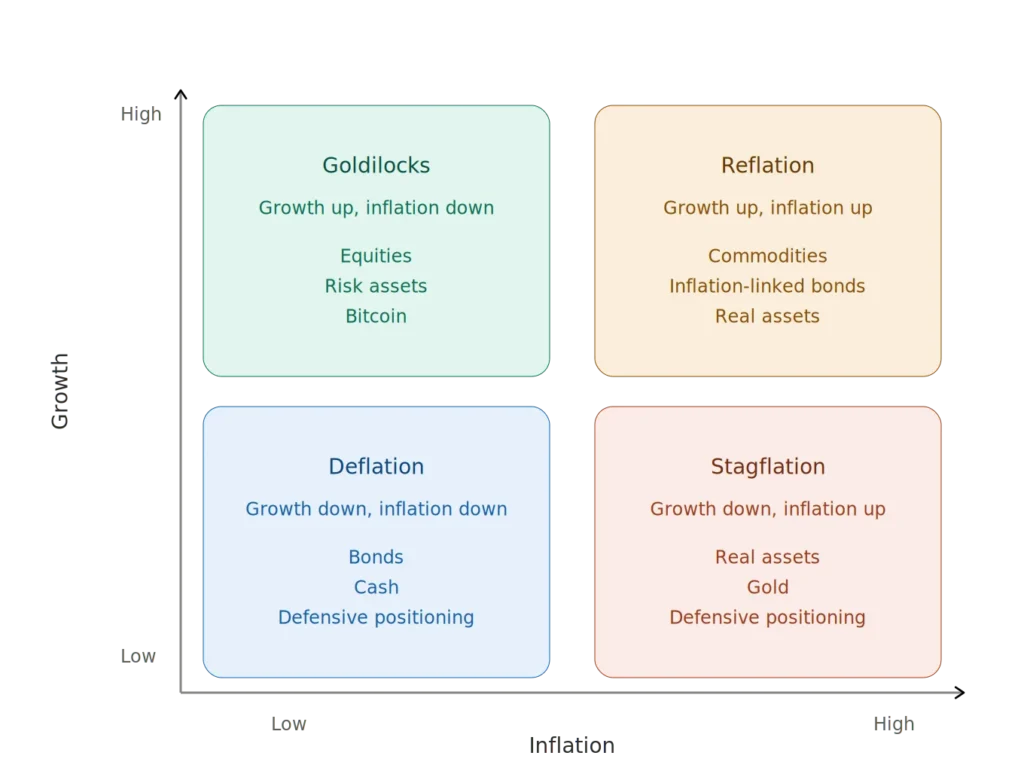
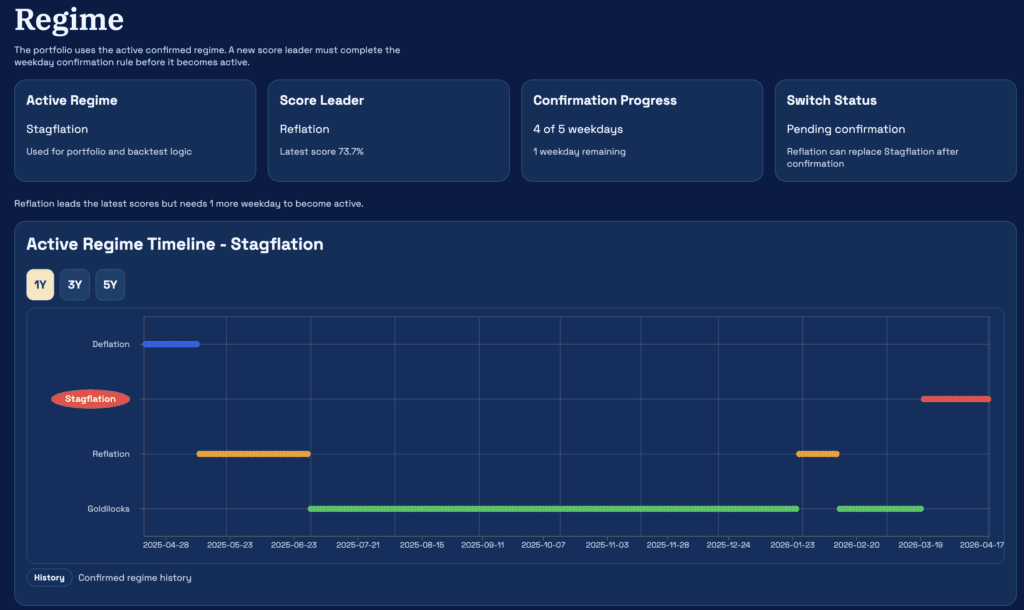
A regime change is only confirmed after five consecutive trading days to filter out noise and prevent whipsaw trades. This means, occasionally during regime transitions, you will see the “confirmed regime” and regime with the highest score differ. This won’t last for long. Referring to the “Confirmation Progress” field on the regime dashboard is a useful way to anticipate an upcoming regime shift.
2. Momentum Trend Signal
Once the regime is set, each ETF in the universe is evaluated individually. If an asset is trending above its momentum line, it earns a place in the portfolio. If it isn’t, it’s removed. No exceptions, no overrides, no “this time is different.”
The process eliminates human instinct to trade narratives and predict market movements, something even the pros notoriously stink at.
3. Realized Volatility Sizing
At the start of each month, every ETF’s allocation is scaled by its recent realized volatility. Higher-vol assets get smaller positions; lower-vol assets get larger ones. This ensures no single holding dominates portfolio risk simply because it moves more. The adjustment happens automatically as part of the monthly rebalance and you just see the final weights on the dashboard.
This is one of the most common hedge fund techniques used to limit unnecessary risk. If you’re interested in learning more about why past volatility can help predict future volatility, we recommend checking out Mandelbrot’s “The Misbehavior of Markets” or to simply look at history and internalize that Chaos begets Chaos.
4. Volatility Override
This is the emergency brake. When realized volatility spikes abnormally, the system reduces exposure automatically — before a drawdown has time to compound. You don’t need to monitor anything. The override fires on its own.
This is a separate function from the monthly realized volatility sizing. This is an emergency override function that protects the portfolio in the case a portfolio holding experiences a sudden large drawdown. This will limit losses and is part of what allows us to size trending positions confidently knowing we can evacuate on the downside.
What You Actually Do Each Month
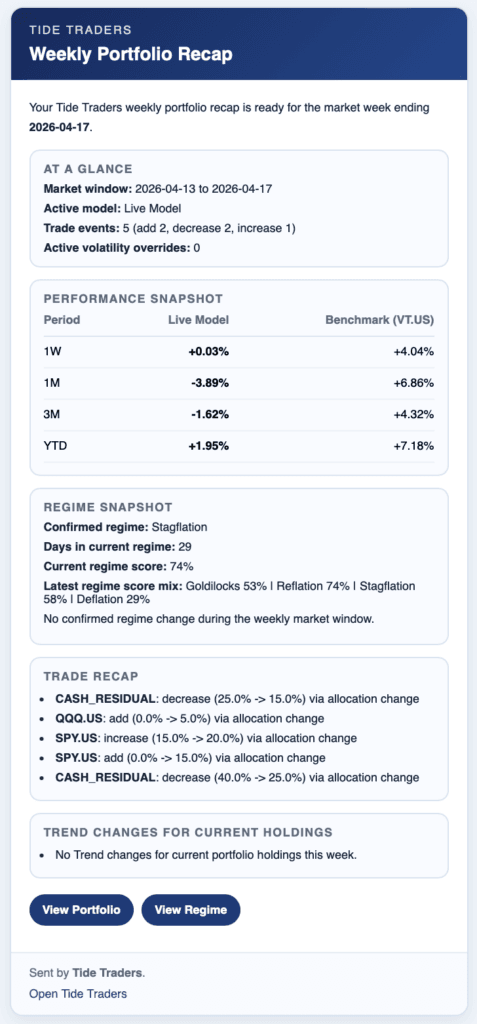
In your inbox, you’ll receive weekly/monthly updates like the one below. They provide updates related to regime changes and other position sizing changes. Just check your email, as you always do, each morning and experience the peaceful that comes from investing with a tried and true process that doesn’t require understanding complex narratives in a world that isn’t always what it seems.
What You Get
A monthly paid subscription gives you access to the live dashboard with current regime status, target ETF allocations, historical regime data, and notification alerts. All signals are updated nightly. Rebalance instructions are issued monthly, weekly, and anytime the regime/asset signal changes.
What This Is Not
TTP is not a fund, not a managed account, and does not execute trades on your behalf. It is a signal and allocation service. You maintain full custody of your assets in your own brokerage account at all times. We never see or touch your money.